Sink clogged? The cause and the solution!
- Home
- >
- Sink clogged? The cause and the solution!
Sink clogged?
Having a Clogged Sink
A clogged sink can be very frustrating. You may no longer be able to wash your pots and pans properly in the sink or use the dishwasher as usual. Ignoring the problem will not solve anything, so it is important to start looking for a solution as soon as possible.
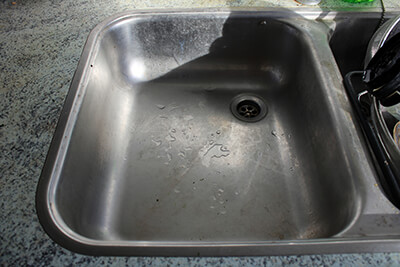
When a sink becomes blocked, quick action is important. If the clog is not cleared in time, it can lead to more serious problems in your drain pipes later on. Knowing what steps to take can help prevent additional damage and costly repairs.
In many cases, it is difficult to determine the exact cause or location of the blockage. For this reason, we have gathered useful information about the most common causes of kitchen sink clogs and the possible solutions.
Causes and Solutions
A blocked sink can have several different causes. The purpose of this page is to provide clear information about these causes and how they can be resolved. Many homeowners and businesses are not fully aware of the risks and solutions. That is why we created this page: to offer accessible information in one place.
You will also find a question and answer section that is regularly updated with practical advice.
Preventing Future Problems
This page explains what could happen if your sink becomes clogged at home or in your business. It also provides recommendations on how to reduce the risk of blockages in the future.
Regular maintenance can prevent many problems. The type and frequency of maintenance may differ for households and businesses, and you can read here which situation applies to you.
Planning Renovations
If you are planning a renovation, it is important to consider the drainage system as well. On this page, you can find information about what to take into account so that you can continue using your sink without problems in the future.
Our Goal
Our goal is to help both homeowners and businesses prevent major repairs. By following the tips on this page, you can significantly reduce the risk of unpleasant surprises.
If your sink does become clogged and you cannot solve the problem yourself, there is no need to worry — we are always ready to help.
Table of Contents
The table of contents below shows all the topics covered on this page. By clicking on a topic, you will automatically go to the relevant section.
If you prefer to immediately call in the help of a professional unblocking company, you can contact us using the telephone number below. We operate throughout the Netherlands.
Symptoms of a clogged sink:
Water comes out of the siphon under the sink
The function of the siphon (gooseneck) of a sink is to prevent drain odours from rising in the kitchen. For example, the siphon in the kitchen has to process all kinds of waste. Over time, the siphon can become clogged because there is constantly some water in the siphon that is dirty. The dirt will then increasingly adhere to the walls of the siphon. An expert can usually unclog the siphon, but in some cases the siphon is so contaminated that it is not worth unclogging it, in which case it is better to have a new siphon installed.
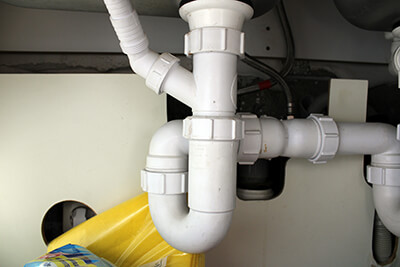
When your siphon under the sink is clogged, you will notice that the water is not draining properly. You will also notice bubbles coming from the drain in the sink. The kitchen sink siphon is connected to the pipe directly under the sink. It is very easy to clog this pipe because it is much narrower than a normal pipe. You should certainly not ignore this problem as it could result in flooding.
The safety grille of the sink no longer works
Most sinks have special protection against overflowing the sink. If you leave the tap open and forget about it, a special grate prevents a flood in your kitchen.
As long as water can still flow out through this safety grille, the sink is not clogged. However, when the water stops draining once it reaches this level in the sink, it is a sign that the drain is clogged.
It’s leaking under the sink
A leak under the sink is a common symptom of a clogged sink. Due to the blockage, the water cannot flow away and comes through the cracks in the drain.
This problem mainly occurs with the couplings. It may be that the drain has not been properly secured for a long time and the blockage may cause these types of defects to become apparent in an annoying way.
As soon as you notice that there is a leak under the sink, it is best to place a bucket under the spot where it is leaking.
Double sink is clogged
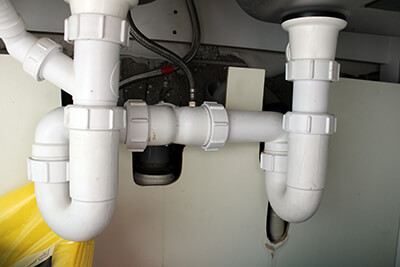
If you have a clogged double sink at home, the clogging problem can vary. The usual blockage is where both pipes are connected under the sink.
The pipes have a T-shape in the area where they are connected. This can result in your sink filling up with dirty things that you dumped down the drain on the other side.
If you decide to use a plunger to unclog the drain pipe, you will need to plug the hole on one side of the sink. If you don’t, the pressure won’t build as it should and it will make your effort useless.
A clogged sink on one side:
If the sink is clogged on one side, inspect the area directly under the sink. Each sink has a separate drain that is ultimately brought together to one main drain in the kitchen.
If only one of the two sinks is clogged, the problem is most likely in the small piece of drain that belongs specifically to that sink. This is a relatively simple type of blockage that you can best try to clear yourself with a plunger.
The water runs back into the dishwasher
If water comes up into the dishwasher from the drain when you try to use the sink, this indicates that the sink is clogged. The location of the blockage is most likely a little further down the kitchen drain.
The drain from the sink and dishwasher ultimately ends up in the kitchen drain.
When the water from the dishwasher flows onto the kitchen floor, it is best to put down towels to ensure that your floor is not damaged. It is important that you no longer use the tap in the kitchen until a solution to the blockage problem has been found.
The water keeps flowing back out of the sink drain
If the water keeps coming back up from the sink drain, something is clearly wrong. You probably haven’t properly maintained your sink drain, leaving residue on the inside of the pipe.
Ultimately, the inside becomes increasingly clogged and the water can no longer flow away. The blockage can be located in many places along the drain.
With these symptoms, it is best to ensure that the situation is stable: put down towels to ensure that the water cannot cause damage and ensure a quick solution to the blockage problem.
On this page you will see a number of tips that you can try yourself, but you are also free to contact us directly to unclog your sink drain.
Standing water in the sink:
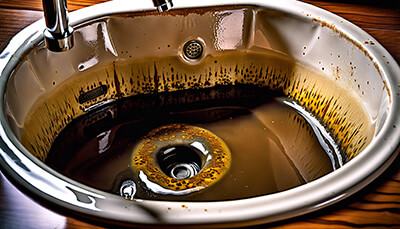
If the water remains stagnant in the sink, this is a clear symptom of a sink clog (unless you forgot to remove the stopper!).
Under these circumstances you can no longer use the sink at all and that is very annoying. Especially if you only have access to one sink.
The first thing you can try to remove the blockage is using a plunger. If that does not work and you have access to a wet vacuum cleaner, you can try placing it on the drain.
If this still does not solve the problem, you can examine the pipe under the sink. Place an empty bowl underneath to collect the water from the pipes. Then unscrew the connection of the pipes in the lower part under the sink and let the water drain out.
Next, run the tap to check the water flow in the upper part of the pipe you disconnected. If the water flows out normally, it means the blockage is deeper in the pipe.
In that case, you will need to use an unblocking spring to remove the clog. Most people do not have this tool at home, which is why they often call a professional unblocking expert
Causes of a clogged sink:
A clogged sink due to grease
Grease can easily clog a sink. This is because it is generally very thick, causing a buildup in the drain. It is obvious to say that you should not throw grease down the drain, but it is inevitable for everyone that small residues of grease end up down the drain when you wash the dishes.
It is precisely these types of small leftovers that, over time, cause the grease to build up further in the drain. The passage for the water becomes smaller and smaller and eventually you will notice that the drain is clogged if you do not have the drain cleaned in time.
No matter what type of food it is, it usually contains fat. This is because fat is used in cooking to make meals tastier. In addition, a small amount of fat will help you digest your food better.
However, if you wash the pots while they still contain grease, the grease will end up in the drain. At cold temperatures, the grease will solidify and stick to the walls of the tubes. The leftovers will then very easily pile up on the grease, creating a very serious clogging problem.
Therefore, emptying fat directly into the sink is prohibited unless you want to spend a lot of money replacing the pipes. To prevent this, try to pour less grease into the sewer where possible. Also make sure that you use hot water when washing dishes.
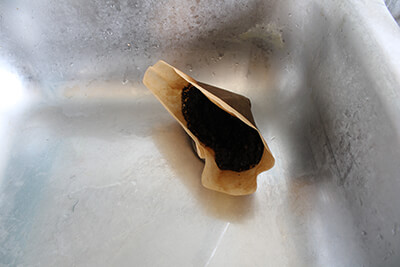
A clogged sink due to coffee residue
Unfortunately, many people think that coffee can be washed down the sink. In the beginning you will not experience any inconvenience from this, but over time this can certainly lead to problems.
The sink drain contains all kinds of sticky residue and coffee grounds can cling to it, eventually leaving you with a clogged sink.
In short: first filter the coffee with a sieve and throw away the coffee residues in the trash.
A clogged sink due to food
A sink clogged with food is one of the most common kitchen blockages. After every meal, plates, pots and pans are rinsed or washed, causing grease and food residues to end up in the drain. In combination with soap and water that is not too hot, this can easily clog your sink.
To prevent this, it is best to first wipe everything with a cloth. This also prevents your dishwasher from becoming clogged.
By definition, food does not belong down the drain. Our advice is to throw away all your food, including food scraps, in the trash. Installing a filter on your sink drain can help keep food particles out.
You can easily throw away the remains in the filter, so that your drain remains protected as much as possible. A filter is an affordable solution if you consider that it can save you the costs of a blockage in the future.
It is a misconception to think that foods such as pudding and other liquefiable foods can go down the drain without any problems. There is always residue left in the drain that ultimately restricts the flow.
Use your sink sustainably. Remind everyone in your family that waste belongs in the trash and not in the drain.
A clogged sink due to plastic
Anyone with common sense understands that plastic does not belong down the sink drain. However, it can sometimes happen that plastic accidentally ends up in the drain.
This often occurs when there is no filter installed. Since plastic is usually transparent, it may go unnoticed and get flushed further down the pipe.
This can lead to serious problems, as plastic can get stuck deeper in the pipe, making it almost impossible to remove without professional help.
Make sure the countertop remains clean so that plastic packaging does not enter the sink.
A clogged sink due to waste
Waste in the kitchen must always be disposed of properly. Boxes, plastic, and wrappers should never go down the drain.
Using the sink for this purpose can lead to major problems such as blockages or even damage to the drain, making the sink unusable.
Repairs are possible but often expensive. Not everyone is aware of proper drain usage, especially children, which increases the risk of blockages.
Installing a sink filter is a simple and cost-effective way to prevent future problems.
A clogged sink due to construction waste
During renovations, construction debris can easily enter the sink drain. This can happen when rinsing tools or working with materials like tiles and plaster.
It is wise to temporarily cover the drain during work. Construction materials can harden inside pipes, causing stubborn blockages that are difficult to remove.
In severe cases, parts of the drain may even need to be replaced.
Do not underestimate dust and grit, as they can accumulate and solidify inside the pipes.
A clogged sink due to limescale
Lime is naturally present in drinking water. Over time, limescale builds up on the inside of your drain pipes.
This buildup gradually restricts water flow and can eventually lead to blockages.
Anyone who uses appliances like kettles will recognize how quickly limescale accumulates. The same process happens inside your drain pipes.
A clogged sink due to candle wax
It is important that you never pour candle wax down the sink. Pouring candle wax down the drain can cause major plumbing problems because the melted wax hardens as it cools.
There are alternatives to pouring candle wax down the sink. You can pour candle wax into a cup or container and let it harden there and then you can throw the hardened candle wax away in the trash.
We are regularly called in to resolve a blockage caused by candle wax. It is one of the most complex types of blockages to clear. Prevent the risk of a blockage as much as possible!
A clogged sink due to soap residue
Soap scum can cause a very thick buildup in the sink. You want to make sure that this is prevented and that you have it cleaned regularly. Soap scum can build up very quickly, so make sure you act appropriately. The sooner you clean the drain (professionally), the less risk you run of your sink becoming clogged.
Many may wonder, what exactly is soap scum? That’s a good question and the answer to that is the residue left behind from soap. You might think that soap scum is not harmful, but that is not true. It’s all the mess left behind from washing dishes, washing hands, regardless of the type of soap you use.
After using soap, it is wise to flush the drain with (boiling) hot water for some time. This way the soap dissolves as much as possible. To limit the risk of a sink blockage due to soap residue, it is best to have the drain cleaned periodically by a professional unblocking company.
A clogged sink because of hair
Hair is a common cause of a clogged sink. Hair falls out every day in people and animals. It ends up in places where we don’t want it. Unfortunately, this hair also ends up in the sink. After using your sink, it is always wise to remove hair from the drain so that it cannot end up in the drain.
For people with long hair, it is advisable to put an elastic in their hair so that it cannot become loose so quickly. This is not only best for the sink, because you also don’t want any hair to end up in the meal you are preparing in the kitchen.
Therefore, you should not clean brushes and combs in the sink. That’s asking for trouble. It is best to remove the hair with a paper towel and then throw it away in the trash.
A clogged sink due to objects
Objects often get stuck in a sink drain if the sink is not used carefully. Depending on the type of item, this can take a lot of time and money to remove from the drain. The consequence of a blockage may also be that other drain pipes in your building no longer function properly. You want to avoid these types of unpleasant situations as much as possible. Always throw objects away in the trash and not down the drain. Even if you think it won’t be too bad, the object could get stuck in a bend further down the pipe.
We often encounter children’s toys, hairpins, food packaging and parts of crockery in the drain. Our machines are sometimes unable to remove the object, necessitating the replacement of part of the drain. This entails high costs that you can avoid by paying close attention and installing a filter.
A clogged sink due to a construction error
In some situations, there is nothing you can do to prevent the sink drain from becoming clogged. For example, when the drain is not installed properly. A drain diameter that is too small or too many bends too close together can prevent the drain from flowing properly. The drain then becomes clogged more often than average. In some cases, it is possible to have the drain re-installed. Unfortunately, the construction of a number of buildings is cast in concrete, so you have no adjustment options. Then there is no other option than to have the drain cleaned preventively on a regular basis.
We regularly encounter construction errors in new construction. A new home is certainly no guarantee for a perfectly constructed drain. If you experience problems with the drainage in a home that was recently completed, do not hesitate and contact the construction company. The construction company is expected to deliver a properly functioning drain. The sooner you address this, the better.
A clogged sink due to a break in the drain
When there is a break in the drain, a clogged sink is inevitable. A break prevents the wastewater from flowing away properly, causing residues to accumulate even faster in the pipe.
A drain pipe can develop weak spots after a long time. The vulnerability of the drain is further tested if objects that do not belong there are flushed into the drain. Sharp objects are the most dangerous for the drain pipe. While washing dishes, it sometimes happens that a glass breaks, causing sharp shards of glass to end up in the pipe. This will damage the pipe and, in the worst case, may even cause a break in the drain pipe.
If you are sure that there is a break in the drain pipe, it is best to call a plumbing company to repair the drain. If in doubt, you could have a sewer camera inspection carried out.
A clogged sink because the previous resident did not treat the drain properly
If you have purchased a home or are renting a home that is not new, the condition of the drain depends on how the previous resident handled the drain pipe. You can imagine that if someone has regularly flushed grease residues, the drain has had its day and you will have to deal with the consequences.
That is why it is always important to carry out an inspection before renting or purchasing a home. This way you can use this inspection report for negotiations. If the pipe is in poor condition, you will probably receive financial compensation or the previous owner will have the drain cleaned at his expense.
When renting out the home, it is also important to have the drain pipe inspected regularly. This way, the quality of your indispensable drain pipes is guaranteed for future tenants.
A clogged sink due to caked-on cleaning agent
Even cleaning products leave residues. These leftovers can be sticky, allowing waste to adhere to them. After a while, the flow of the drain will become less and less and eventually the drain will be completely clogged if you do not take measures in time.
Here it becomes clear that periodic maintenance of the drain pipe is indispensable, because even when using cleaning agents, it becomes clear that this entails risks in the long term. The sink is indispensable for private individuals and companies. By having the drain professionally cleaned, you know that you always have access to the sink and this prevents unpleasant situations.
We will be happy to advise you on site how to best use the drain. For example, we advise not to use unblocking agents, as this can lead to dangerous situations during our work. In addition, drain unblocking agent can damage the drain and fittings, making the problems worse.
A clogged sink due to poor maintenance
It is important to keep up with the maintenance of pipes and sinks. This way you can avoid expensive repairs as much as possible. Anyone who invests in maintenance will certainly see results in the future because you will experience blockages less quickly. For most households and businesses, a sink is not necessary for a single day. Just as a car needs maintenance, you should also have your sink drain inspected and cleaned regularly.
Regularly flushing the sink with hot water is a form of maintenance that you can perform yourself. This will certainly improve the flow of the drain. It is best to use boiling hot water. With the kettle you can easily bring the water to the right temperature. It is wise to flush the drain several times in succession.
If you do not have any maintenance carried out, it may not be noticeable in the short term during daily use of the sink. Over time, the drain is bound to become clogged and this problem can spread to other drains in your property. Drain pipes are often connected, so it can happen that a sink blockage can result in you not being able to use the washing machine because the drain also overflows.
Even if you think that the drain is being used properly, problems can still arise in the drain, as you have read earlier on this page. Regular maintenance is crucial for optimal functioning of the sink drain. We are happy to help you inspect and clean the drain.
A clogged sink due to eggshells
Many people think that it is possible to break an eggshell into pieces and put it down the sink drain without any problem. There is a misconception that an organic object such as an eggshell is easily degradable, but this is absolutely not the case. The eggshells will never be ground up like normal waste.

The membrane covering the eggshell itself passes through the hole of the sink drain without being completely broken. At some point, combined with some grease, it becomes a hazard to the flow of the drain. The problems of a clogged sink drain can be more serious than you might initially think.
For example, you don’t want your floor to be damaged by a flood because you wanted to throw something as simple as an eggshell down the drain.
A clogged sink due to flour:
Since flour is a powder, you may think that it is not so easy to cause a clogging problem in your sink. However, flour can clump and these pieces will stick to the inside of the drain. It provides an ideal collection point for other waste particles found in the water.
In short: the drainage effect will become less and less. Therefore, you should try to avoid pouring flour down the sink under all circumstances.
A clogged sink due to rice:
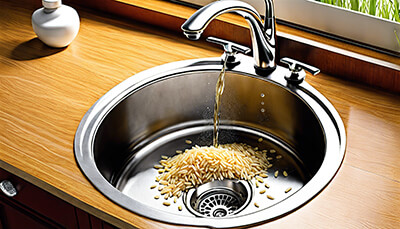
If you have poured rice down the sink in the past, a clogging problem caused by rice should not come as a surprise to you. The rice is rich in carbohydrates and therefore its nature is sticky.
No matter how well the rice is washed, it will remain slightly sticky. This will cause it to get stuck in the pipes and will be very difficult to get rid of.
The sticky rice layer easily allows other food residues to adhere and over time will prevent you from using the sink drain without any problems.
A clogged sink due to freezing of the drain and/or sewer
A sink blockage can also occur because the drain and/or sewer is frozen. In most cases, this is a relatively harmless blockage that can easily be resolved by yourself. Pour boiling water into the sink and repeat several times. Do not pour too much water to avoid possible flooding. If the clog still occurs, check the remaining drains in your home. If these are functioning normally, then there is another cause of the clogged sink that you or a specialist should determine.
A clogged sink after using the waste disposal:
So, you used your garbage disposal and the sink got clogged. You are not the first to face such a problem, so there is no need to panic. Waste processing stops immediately if it contains a hard object that cannot be destroyed. This causes your waste disposal to become clogged. If the waste disposal does not work, the water from the tap is no longer drained away. Since the sink won’t drain, you are left with a clogged sink.
A clogged sink because you have no waste disposal:
If you do not have a waste disposal system in the kitchen, you will often experience problems with the kitchen drain clogging up. This is because waste management grinds the remains before they go to the drain and sewer. This will cause you to have fewer clogging problems, both in your kitchen and in the sewer system.
Having waste disposal does not guarantee that your drains and sewers will always remain clog-free. It is still advisable to make sensible choices about what you do and do not put down the drain. There is plenty to read about this on this page.
A clogged sink because the waste disposal is not working:
Just as mentioned earlier, when the garbage disposal doesn’t work, you will end up with a clogged sink. There are a few reasons why your garbage disposal isn’t working. The main reasons why your waste disposal is not working are:
- There is no power supply. If the waste disposal facility does not have electricity, it will not work.
- The waste disposal is clogged. For safety reasons, the waste disposal will stop working if a metal spoon or glass falls into the waste disposal.
A clogged sink because the drain in the wall is clogged:
If the clog is not under the sink in the drain, the clog may be in the wall. It will be very difficult for a private individual to reach this part of the drain, because you cannot quickly gain direct access without professional equipment.
Breaking the wall would require an unnecessary amount of work. A professional company has access to an unblocking machine with a coil spring, a wet vacuum cleaner (very powerful) and perhaps even a hose with which the drain can be flushed.
A clogged sink because the drain is clogged deeper:
If your sink is clogged because the drain is clogged in a place further than the visible part, your options are limited. Professional equipment and expertise are simply required to properly remove these types of deeper drain blockages.
The moment you notice this problem, you would be very wise to leave the sink as it is. Naturally, we are ready to assist you in such a situation. It is advisable to put some towels down on the kitchen floor as a preventative measure so that a blockage cannot lead to water damage.
Consequences of a clogged sink
Flood
A common side effect of not clearing a clogged sink is that flooding can occur. This happens to thousands of people every year. If you have not yet experienced it yourself, you are probably familiar with the stories from around you.
It is a terrible thing to experience, because your floor and belongings are damaged by the water. In addition, the water may leak to the neighbours, causing you to pay for the damage.

If you notice that the sink is starting to overflow, it is wise to call a drain unblocking company immediately. The problems can spread very quickly if you wait. Don’t underestimate the water, because it spreads quickly and goes through everything.
A sink can also suddenly overflow when there has been heavy rainfall and the sewer system cannot handle the water. It is therefore recommended to have maintenance carried out a few times a year.
Can’t use the sink
A sink is an essential tool in everyday life. It is used for washing dishes and washing hands. You can also use water from the kitchen that is drained into the sink drain to quickly take a glass of water and water the plants.
When you can’t use the sink, the first place you go is the bathroom sink. Unfortunately, in some cases this is not usable, because the drain from the bathroom and the kitchen is often connected to each other.
If the sink works without any problems, there is certainly no guarantee that this will last long if you do not remove the blockage in the sink.
Have you tried everything to clear the blockage yourself, but nothing seems to work? Then you can call on the help of a specialized unblocking company.
The dirty dishes must be left behind
If the blockage does not go away, there is no other option than to leave the dishes behind. That is one of the biggest annoyances in the household.
The piled-up dishes in the sink look very unappetizing and can also attract pests that can be harmful to your health.
The sink in the bathroom may still work, but it is not ideal for washing dishes as there is not enough space for that.
To avoid this situation, it is wise to have periodic maintenance carried out on the kitchen drain.
Leakage
A clogged sink can cause a leak. The water in the drain can no longer drain properly and is looking for a way out, causing water to drip through the smallest cracks in a drain.
This dripping will only stop when the blockage is cleared.
Damage to your home and your neighbors
A leak has major consequences. Not only for your own building, but the water can also flow to the neighbor’s building. The neighbors will definitely hold you liable for the damage.
The sooner you take action, the better.
Water can cause permanent damage to your belongings, which are sometimes irreplaceable. A damaged floor also causes major problems and high repair costs.
Electrical hazards
In some cases, the water leaks into places where there are power cables. This can lead to life-threatening situations. Water in contact with electricity leads to a short circuit, which can cause a fire.
If you have the impression that the water is leaking into electricity (such as a ceiling light), do not wait and contact a plumber immediately to get the situation under control. It is very wise to switch off the power for the entire building in advance.
Risk of mold
A moist environment is ideal for mold. If a wall is damp for too long, you will definitely encounter mold problems. Mold can have very adverse health effects.
Vulnerable groups in particular will be the first to be affected. You inhale the fungi that are in the air through the respiratory tract, which is not a desirable situation.
In addition to repairing the leak, you must also remove the mold. This can be done with cleaning products, but you can also choose to outsource this task to a specialized company.
Other drains can also become clogged
In many cases, the drainage system of a building is connected in some way. When water cannot drain properly in one place, the water is pushed to other places.
The mass of the water finds the place of least resistance. For example, a blockage in the kitchen can cause you to see water rising in your bathroom.
No one likes not being able to shower due to a kitchen blockage! It is best to have an expert come by who can remove the blockage the same day.
This way you can be sure that the drain is professionally cleaned and you can shower again without any problems.
When dealing with a sink blockage, it is important to consider your habits in the kitchen. Based on recommendations on this page, you may see things you should not do in the future.
Only then can you limit the risk of a blockage. Drains are used intensively and require proper maintenance for long-term performance.
Annoying odours in the sink
Have you ever walked into the kitchen and noticed a terrible stench? The first idea that comes to mind is that it is probably a fruit or vegetable that you have forgotten and is rotting.
Usually this is not the problem. The real cause is in the sink, even if it is perfectly clean. Food scraps have built up in the pipes under the sink and are starting to rot, causing a horrible smell that spreads into your home.
If this is the case, it is wise not to use the sink. Carefully pour a little baking soda into the drain hole, followed by a dash of vinegar.
Let the sink rest overnight and ensure there is fresh air in the kitchen. This should help reduce the bad odours.
If this does not work, you can call in an expert to inspect the drain.
Living comfort decreases
Constantly worrying about a clogged sink affecting the rest of your home will leave you unnecessarily stressed. That’s no way to live, right?
By following proper maintenance guidelines for your sink drain, you can avoid stress and inconvenience.
Stay on top of maintenance tasks. It may cost a little time and money now, but it will save you from expensive repairs in the future.
What you can try yourself to clear a sink clog:
Unclogging a sink with salt and vinegar:
Salt and vinegar are used in baking and salads. However, these remedies may also help you unclog your sink. Before you start, make sure there is no water in the sink. If there is water in the sink, this method may not work. Here are the steps you can try:
- Pour the salt into the sink drain hole. Two tablespoons are more than enough.
- Pour in the vinegar. You don’t need to use special vinegar. The cheapest one will work fine. Make sure you pour it slowly so that foam forms. You should use about half a liter of vinegar.
- Make sure to leave it on for at least 30 minutes to remove any debris from the drain.
- Then pour several liters of boiling water into the sink to remove what has come loose.
Unclogging a sink with compressed air:
If you have an air compressor, you can use it very effectively to unclog your sink. The air compressor compresses the air and releases it immediately. In other words, it works like a plunger.
The difference is that you don’t do any effort other than pressing the button. Also, the air compressor pushes the air instead of pulling it. In this case, the blockage can only be moved further in and eventually flushed.
Unclogging a sink with a plunger:
Fixing a clogged sink can vary depending on the situation. It can be done very easily and quickly to solve the clogging problem in your sink. You only need to use a plunger.
Placing the plunger on the sink drain and applying pressure will solve the problem in most cases. It can also be more persistent and therefore require more effort.
If it is not possible to remove the blockage with a plunger, it is best to seek professional help.
Unclogging a sink with a high-pressure washer:
If you have access to a high-pressure cleaner, it can help to use it to clear the clogged sink. A high-pressure cleaner is particularly suitable for large blockages that are often deeper in the drain pipe.
There are special high-pressure cleaners for unblocking companies where different nozzles can be installed with which the pipe can be cleaned in a unique way.
Most private individuals who have a high-pressure cleaner would be wise to first test it on a drain in the garden, otherwise flooding will definitely occur in the kitchen.
How to fix a clogged sink with videos on YouTube:
There are a number of videos on YouTube in which professionals give tips on how to deal with a sink clog. You will certainly encounter the same information that you have read so far on this page, but who knows, you may discover a new method that is not yet known to us.
It can be reassuring to see the above methods in action before you decide to use one of the unblocking methods yourself. If you notice that it is not something that you could do yourself, it is of course advisable for safety reasons to always call in the help of a drain unblocking company.
Notify the landlord of the clogged sink:
Those who rent a property often think that the landlord is responsible for the costs of clearing the blockage.
This often turns out to be incorrect, because, for example, the rental contract indicates that the tenant must pay the costs for clearing a sink blockage. The use of the sink is something that you influence yourself and therefore in most cases the cause lies with you. The landlord usually only bears costs if it turns out that the drainage pipe was already in a very poor condition.
However, it may be the case that the landlord is (unobligated) willing to pay the costs for the unblocking work. That’s why it doesn’t hurt to inform the landlord. We know from experience that there are indeed landlords who cover the costs of clearing the blockage.
Preventive measures to prevent a sink clog:
If you want to avoid future clogs in your sink, you need to maintain it properly. There are a number of things you can do to keep the flow of your sink drain effective. We can give you a few tips to minimize the risk of a blockage:
- Wipe pots and pans as much as possible before putting them in the sink.
- Always use hot water when washing and rinsing.
- Regularly run hot water through the drain so that dirt residues can be loosened.
- Never flush food and coffee residues down the sink.
- You can hire a professional unblocking company for periodic maintenance of the drain pipe.
Schedule periodic maintenance
If you schedule periodic maintenance for your sink drain, you won’t have to worry about anything. Your home comfort will be in tip top condition. Nothing is better than having your drain cleaned by a specialized company.
They know how to apply the best method and are also able to give you expert advice on site about possible situations that you can expect based on the condition of the sink drain.
A well-maintained sink drain produces satisfied residents. Whether this is yourself, you rent out the property or when you are going to sell the house.
Anyone who can provide a recent maintenance report will inspire confidence in everyone. That also says a lot about the rest of the condition of your home, because someone who pays attention to the drain pipes will also have carried out the other tasks in the house with care.
We are ready to perform periodic maintenance on your sink drain. Both private individuals and companies can contact us.
You can contact us via the telephone number below so that a specialist can assist you.
Frequently asked questions about a clogged sink:
1. Do I need to have a sink clog cleared quickly?
Yes, because if you wait too long with a solution, the water can cause damage in all kinds of ways. Not only in the building you are in, but also with the neighbours.
2. How long does it take to clear a sink clog?
That depends on how persistent the blockage is. On average, a specialist will need an hour to clear a sink blockage. Not every blockage is the same, so it is advisable to allow more time if you have an unblocking company come by.
3. Is a clogged sink harmful to your health?
A clogged sink is not directly harmful to your health. Dirty water is obviously not conducive to keeping it near you and a sink blockage can also lead to stress. So, you want to prevent this as much as possible or have it resolved as quickly as possible.
4. How can I fix a clogged sink in the mobile home?
Because the pipes in a mobile home are narrower, blockages are relatively common. The pipes are also shorter, which makes it easier to clear the blockage. Most problems arise directly under the sink (in the gooseneck), which is why a plunger is often sufficient to unclog the sink yourself.
5. Can every sink clog be cleared?
In principle, the answer to this question is: yes. However, it may happen that a construction error is the cause of the sink blockage. In that case, an action plan will need to be drawn up for replacing the drain pipe.
6. Can a sink blockage be prevented forever?
No, if only it were true. The risk of a blockage can at most be limited by, for example, carrying out periodic maintenance.
7. Do I have to prepare anything myself if I seek the help of a specialist?
It is important that there is a safe workplace with sufficient space to place the necessary equipment. Once you make an appointment with an expert, make sure you don’t use the sink again. This could only make the problem worse.
8. If both my sink and the bathroom drain are clogged, what should I do?
In this case it is best to call in a specialist. The blockage is then clearly further down the pipe and most people do not have the necessary equipment or experience to solve this themselves. An unblocking company knows that this blockage can be resolved in such a way that the drain in both rooms will function properly again.
9. Do I have to inform my neighbours that I am going to unclog the sink?
When unblocking the drain, flooding may occur. In addition, noise pollution can occur during unclogging due to the unblocking spring that rotates through the drain pipe. For a good relationship with the neighbours, it is advisable to inform them of this when you know they are home.
10. Can a sink clog be resolved on the same day?
In the vast majority of cases, a sink clog is cleared within a few hours. In extreme circumstances there may be a construction problem and in that case an action plan must be drawn up as a drain pipe is usually not replaced on site.
Do you want to make an appointment?
We will be happy to help you solve all types of drainage problems.